In today’s competitive business environment, creating a recognisable brand requires more than having an attractive logo or a professional website. Businesses need creative ways to connect with their audiences, build brand awareness and make a lasting impression. One effective way to achieve these goals is through custom caps.
Custom caps have become an increasingly popular choice for clothing brands, small businesses, sports teams, fashion retailers, corporate organisations and promotional campaigns. They combine everyday functionality with personal style, making them an excellent addition to branded merchandise and clothing collections.
Whether you are launching a new fashion label, promoting an established company, creating merchandise for your customers or designing matching headwear for your team, custom caps provide an opportunity to showcase your brand in a practical and fashionable way.
However, designing a cap that genuinely represents your brand involves more than simply placing a logo on the front. You need to consider the cap style, fabric, colours, embroidery techniques, logo placement, fit and finishing details. Every element contributes to the overall appearance and quality of the finished product.
At USA Custom Caps, we understand that every brand has its own identity and creative vision. Choosing the right combination of materials, colours and customisation options can help transform an ordinary cap into a distinctive piece of branded headwear.
In this complete guide, we will explore how to design your own custom caps for your brand, from developing your initial concept to selecting materials, choosing embroidery methods and preparing your caps for production.
1. Understand Your Brand Identity Before Designing Custom Caps
The first step in designing custom caps is understanding what your brand represents. Before choosing fabrics, colours or embroidery styles, think about the message you want your headwear to communicate.
Your caps should feel like a natural extension of your existing brand identity. They should reflect your company’s personality, target audience and overall visual style.
For example, a premium streetwear brand might prefer oversized embroidered logos, structured snapbacks and bold colour combinations. A fitness company may choose lightweight performance caps with breathable materials, while a corporate business might prefer classic baseball caps with subtle embroidered branding.
Start by considering the following questions:
- What does your brand represent?
- Who is your target audience?
- What age group will wear your caps?
- Are you creating caps for retail sales, promotional purposes or staff uniforms?
- Do you prefer a minimal, modern, sporty or premium appearance?
- Which colours best represent your brand?
Answering these questions will help you establish a clear design direction.
Create a Consistent Brand Appearance
Consistency is essential when designing branded merchandise. If your business already has a recognisable colour palette, logo and typography, use these elements as the foundation of your custom cap design.
For instance, if your brand primarily uses black and white, you could create black caps with white embroidery or white caps with black logos.
Similarly, businesses with green, navy or red branding can incorporate those colours into their headwear designs.
You do not necessarily need to reproduce your entire brand identity on every cap. Sometimes a small symbol, distinctive monogram or carefully positioned brand name can create a more sophisticated result.
The objective is to make your caps recognisable without overcrowding the design.
2. Choose the Right Custom Cap Style
Selecting the correct cap style is one of the most important decisions in the design process. Different cap styles create different appearances, offer different levels of comfort and appeal to different audiences.
The best style depends on your brand personality, intended use and preferred fashion aesthetic.
Here are some popular options to consider.
Custom Baseball Caps
Baseball caps are among the most versatile styles of branded headwear. Their classic appearance makes them suitable for fashion brands, sports teams, businesses, promotional campaigns and everyday casual wear.
They usually feature a curved brim, a rounded crown and an adjustable or fitted closure.
You can customise baseball caps with embroidered logos, lettering, monograms and other branding details.
They are particularly suitable for businesses looking for timeless headwear that customers can wear throughout the year.
Custom Snapback Caps
Snapback caps are a popular option for streetwear labels, lifestyle brands and fashion-focused businesses.
They typically feature a structured crown, flat brim and adjustable plastic snap closure at the back.
Their bold silhouette provides an excellent surface for larger logos, statement graphics and 3D puff embroidery.
If your brand focuses on urban fashion, contemporary streetwear or youthful styles, custom snapback caps can help create a distinctive product collection.
Custom Trucker Hats
Trucker hats are recognised by their foam or structured front panels and breathable mesh back.
They are particularly suitable for outdoor brands, sports businesses, casual clothing labels and promotional merchandise.
The front panel provides space for embroidered logos, printed artwork and custom patches, while the mesh construction gives the cap a relaxed appearance.
Consider trucker caps if your target audience prefers comfortable headwear with a casual outdoor aesthetic.
Custom Dad Hats
Dad hats offer a relaxed and understated appearance.
They usually feature an unstructured crown, curved brim and adjustable back closure.
Small embroidered logos, initials and minimalist symbols work particularly well with this style.
Fashion labels, lifestyle businesses and independent clothing brands often choose dad hats because they are easy to incorporate into everyday outfits.
Custom 5-Panel Caps
Five-panel caps are another excellent choice for modern clothing brands.
Unlike traditional six-panel designs, many five-panel constructions feature a single uninterrupted front panel. This provides a clean surface for wider logos and creative artwork.
They are popular in skateboarding, streetwear, outdoor fashion and contemporary lifestyle collections.
Custom 6-Panel Caps
Six-panel caps feature six fabric sections stitched together to create the crown.
They offer a familiar baseball-cap silhouette and can be produced in structured or unstructured constructions.
They are suitable for businesses, sports teams, promotional merchandise and everyday fashion collections.
When creating a logo for a six-panel cap, remember to consider the centre seam when deciding on the artwork size and positioning.
Custom Bucket Hats
Bucket hats have become an important part of casual and streetwear fashion.
Their distinctive downward-sloping brim creates a different look from traditional baseball caps.
Brands can customise bucket hats using embroidery, printed designs, woven labels and other decorative details.
They are particularly suitable for summer collections, festival merchandise, travel brands and fashion retailers.
Choosing the right cap style ensures your finished product matches your brand’s personality and customer expectations.
3. Select High-Quality Materials for Your Custom Caps
The fabric you choose affects the appearance, comfort, durability and overall quality of your custom caps.
Even the most attractive logo can lose its impact if the material feels uncomfortable or does not suit the intended purpose.
Therefore, material selection should be an important part of your design planning.
Cotton Twill
Cotton twill is a popular choice for custom baseball caps and embroidered headwear.
It has a distinctive diagonal weave that provides a durable yet comfortable fabric surface.
Its appearance works well with traditional, premium and casual cap designs.
Cotton twill is particularly suitable for brands that want classic headwear with embroidered logos.
Polyester
Polyester is commonly used in sportswear and performance headwear.
It is lightweight, practical and available in different colours and fabric finishes.
Businesses creating sports caps, running merchandise and outdoor headwear may consider polyester because it can be suitable for active environments.
Cotton and Polyester Blends
Blended fabrics combine characteristics of different fibres.
Depending on the fabric composition, these materials can offer a balance of comfort, durability and shape retention.
They are worth considering when designing caps for everyday wear, promotional campaigns or branded uniforms.
Mesh Fabric
Mesh is particularly popular for trucker hats.
It provides a breathable back construction and creates the familiar trucker-cap appearance.
Brands targeting outdoor enthusiasts, casual fashion customers and lifestyle audiences may find this material combination especially appealing.
Corduroy
Corduroy is an interesting option for brands looking to create something different.
Its textured surface provides a distinctive appearance that works particularly well with vintage-inspired fashion and premium casual collections.
Corduroy caps can look especially attractive in earthy colours such as brown, beige, olive and burgundy.
Washed Cotton
Washed cotton creates a softer appearance with a relaxed, slightly vintage finish.
It is a popular option for dad hats and casual baseball caps.
Brands that prefer understated fashion products can use washed fabrics to create headwear with a more established and comfortable aesthetic.
Always consider the intended use of your caps before selecting a material. A lightweight sports cap and a premium streetwear cap may require completely different fabric choices.
4. Design a Unique Logo for Your Custom Caps
Your logo is often the most recognisable feature of branded headwear.
It communicates your brand identity and helps customers associate the product with your business.
However, designing a logo for a cap requires a slightly different approach from creating artwork for a website, business card or packaging.
The decoration area on a cap is relatively small and usually curved. Therefore, your artwork must remain clear and attractive when reproduced on fabric.
Keep Your Logo Simple
Simple logos are generally easier to recognise and reproduce on custom caps.
If your existing logo contains several illustrations, small text elements or complicated details, consider creating a simplified version specifically for headwear.
For example, a clothing brand with a long business name might use its initials on the front and place the complete brand name on the back.
This creates a clean appearance while maintaining brand recognition.
Choose Appropriate Typography
Typography can significantly influence the appearance of your custom caps.
Different font styles communicate different brand personalities.
- Bold typography creates a strong and sporty appearance.
- Minimalist lettering gives caps a clean and modern finish.
- Script fonts can create an elegant or creative look.
- Vintage typography works well for retro-inspired fashion.
- Block lettering is particularly suitable for athletic and streetwear designs.
Choose fonts that remain readable at smaller sizes.
Consider Monograms and Symbols
A monogram can be an excellent alternative to a full company logo.
It allows brands to create a recognisable visual identity using one or two letters.
Similarly, a simple icon or emblem can make your caps look distinctive without requiring extensive artwork.
This approach works particularly well for premium clothing brands, independent designers and businesses that prefer subtle branding.
5. Choose the Best Embroidery Technique
The decoration technique you select has a major influence on the finished appearance of your custom caps.
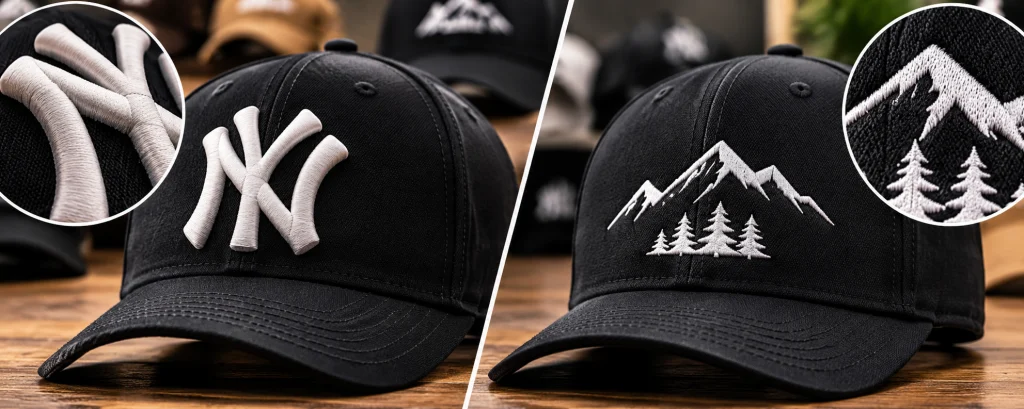
Embroidery remains a popular choice for branded headwear because it creates a textured finish and gives logos a professional appearance.
However, different embroidery techniques produce different results.
Flat Embroidery
Flat embroidery is one of the most widely used methods for custom embroidered caps.
It involves stitching thread directly into the fabric to reproduce your logo, lettering or artwork.
The finished design has a traditional embroidered appearance and works well for most business logos.
Flat embroidery is suitable for:
- Company logos
- Brand names
- Initials and monograms
- Sports team emblems
- Small decorative graphics
- Promotional branding
It is a versatile option for both simple and moderately detailed artwork, depending on the design dimensions and stitching requirements.
3D Puff Embroidery
If you want your caps to stand out, 3D puff embroidery is worth considering.
This technique uses foam beneath the embroidery stitches to create a raised effect.
The result is a bold, dimensional logo that adds depth and texture to the cap.
3D puff embroidery is particularly popular for:
- Streetwear brands
- Snapback caps
- Sports merchandise
- Bold initials
- Large lettering
- Premium fashion headwear
Simple, bold artwork generally produces the best results. Extremely fine details and complicated shapes may not be suitable for this technique.
Embroidered Patches
Custom patches provide another creative way to personalise branded caps.
Instead of stitching the complete design directly into the cap, the artwork is produced as a separate patch and attached to the fabric.
Popular patch options include:
- Embroidered patches
- Woven patches
- PVC patches
- Leather patches
- Printed patches
Patches can create a distinctive appearance and are especially useful for artwork that requires borders, layered colours or a badge-style presentation.
For example, an outdoor clothing company might choose a leather patch on a trucker hat, while a sports brand could use a detailed embroidered emblem.
Printed Designs
Printing can be an alternative for artwork that includes multiple colours, gradients or details that are difficult to reproduce with embroidery.
Depending on the fabric and construction, suitable printing or transfer techniques can create colourful and visually detailed designs.
The best method depends on your artwork, material and production requirements.
Before selecting a decoration method, consider the overall appearance you want to achieve and discuss the technical suitability of your design.
6. Select Colours That Represent Your Brand
Colour selection is another important element of designing custom caps.
The right combination can make your headwear visually attractive, recognisable and consistent with your business identity.
Start with your existing brand colours and then explore combinations that work well with your chosen cap fabric.
Here are some popular colour combinations:
| Cap Colour | Logo Colour | Overall Appearance |
|---|---|---|
| Black | White | Modern and classic |
| White | Black | Clean and minimal |
| Navy | White | Professional and timeless |
| Olive Green | Black | Outdoor and contemporary |
| Beige | Brown | Natural and premium |
| Red | White | Bold and energetic |
| Grey | Black | Understated and versatile |
| Maroon | White | Rich and distinctive |
You can also experiment with contrasting panels, coloured brims, different mesh colours and matching embroidery.
Maintain Good Colour Contrast
Your logo should be easy to recognise from a reasonable distance.
For example, white embroidery on a black cap creates strong contrast, while dark navy embroidery on a black cap may be difficult to distinguish.
If your brand uses similar shades, consider introducing a contrasting thread colour or a different fabric combination.
Avoid Overcomplicating the Colour Palette
Using too many colours can make a cap look visually crowded.
For most logo-based designs, two or three main colours can provide an attractive starting point.
The aim is to create a balanced product where the cap and logo complement each other rather than compete for attention.
7. Plan Your Logo Placement Carefully
Logo placement can completely change the appearance of a custom cap.
Although the front panel is the traditional location for branding, modern cap designs offer several opportunities to add additional details.
Front Logo Placement
The front is generally the most noticeable decoration area.
You can position your company logo, brand name, monogram or emblem in the centre of the front panel.
A larger design creates a bold statement, while a smaller logo can produce a more subtle and premium appearance.
Side Embroidery
Side embroidery is a great way to introduce additional branding.
You could add:
- A small brand symbol
- Initials
- A short slogan
- A collection name
- A decorative graphic
Side logos work particularly well when combined with a simple front design.
Back Logo Placement
The back of the cap provides another useful decoration area.
Brands can add their website name, initials, small logo or establishment year above the closure.
For example, a clothing brand might feature its main logo on the front and a small embroidered brand name at the back.
Under-Brim Customisation
For selected cap constructions, the underside of the brim can also be customised.
This is an interesting option for brands looking to add extra personality to their products.
Printed patterns, contrasting colours and subtle graphics can create an additional design feature.
Remember that additional decoration should support your main design rather than make the cap look overcrowded.
8. Choose the Right Cap Structure and Closure
A cap’s construction affects its fit, appearance and overall design.
Two caps with identical colours and logos can look completely different depending on their crown structure and closure.
Structured Caps
Structured caps contain additional support in the front panels, helping the crown maintain its shape.
They are suitable for bold logos, 3D puff embroidery and traditional branded headwear.
Unstructured Caps
Unstructured caps have a softer construction and a more relaxed appearance.
They are particularly suitable for dad hats, casual collections and minimalist fashion brands.
Snapback Closure
Snapback closures use adjustable plastic straps with multiple fastening positions.
They are popular for streetwear and casual headwear.
Metal Buckle Closure
Metal buckle closures provide an adjustable fit and can give caps a more refined appearance.
They are commonly used in premium and casual cap designs.
Hook-and-Loop Closure
Hook-and-loop closures are practical for promotional caps, staff merchandise and everyday adjustable headwear.
Fitted Caps
Fitted caps do not have an adjustable back closure.
They are designed around specific head sizes and are often selected for sports-inspired and premium collections.
When choosing a closure, consider your target audience and whether you want your caps to accommodate different head sizes.
9. Create a Design That Appeals to Your Target Audience
One of the biggest mistakes businesses make when designing branded headwear is focusing entirely on what they personally like.
Your customers should be at the centre of the design process.
A cap intended for young streetwear customers may need a completely different aesthetic from one designed for corporate employees or professional sports teams.
Think about the lifestyle, interests and preferences of your target audience.
For Fashion and Streetwear Brands
Streetwear customers often appreciate distinctive designs and creative details.
Consider:
- Oversized front embroidery
- 3D puff lettering
- Contrasting fabric panels
- Flat-brim snapbacks
- Washed cotton finishes
- Bold monograms
- Decorative side embroidery
A well-balanced combination of these details can help create a recognisable fashion product.
For Corporate Businesses
Corporate headwear should generally reflect professionalism and brand consistency.
Consider classic baseball caps, neutral colours and clean embroidered logos.
Small front logos and subtle side branding can create a polished appearance.
For Sports Teams
Sports caps should combine an attractive appearance with practical comfort.
Consider structured crowns, breathable materials, team colours and prominent embroidered emblems.
The design should be recognisable while remaining comfortable for players and supporters.
For Promotional Campaigns
Promotional caps should be attractive enough for people to wear beyond the original event.
Choose versatile colours, comfortable materials and easy-to-recognise branding.
A useful promotional cap can continue displaying your business identity long after the campaign has finished.
10. Prepare Your Logo Artwork for Production
Once you have decided on the cap style, colours and decoration method, the next step is preparing your artwork.
Professional artwork preparation helps ensure that your design can be reproduced accurately.
If you already have a brand logo, provide the highest-quality version available.
Preferred formats may include:
- AI (Adobe Illustrator)
- EPS
- SVG
- High-resolution PNG
Vector artwork is particularly useful because it can be resized without losing its original quality.
Check the Artwork Dimensions
Your logo should fit comfortably within the available decoration area.
A design that is too large may interfere with seams, while an extremely small logo may lose important details.
The correct dimensions depend on the cap construction and decoration method.
Review Fine Details
Small lettering, thin lines and complicated shapes may require adjustments before embroidery.
Remember that embroidery uses physical thread rather than digital pixels.
Some details that appear clear on a computer screen may become difficult to reproduce when stitched onto fabric.
Confirm Thread Colours
If your brand has specific colour requirements, provide the relevant colour references.
Pantone references or approved thread colour charts can help communicate your preferences.
Always review the final colour selection before production.
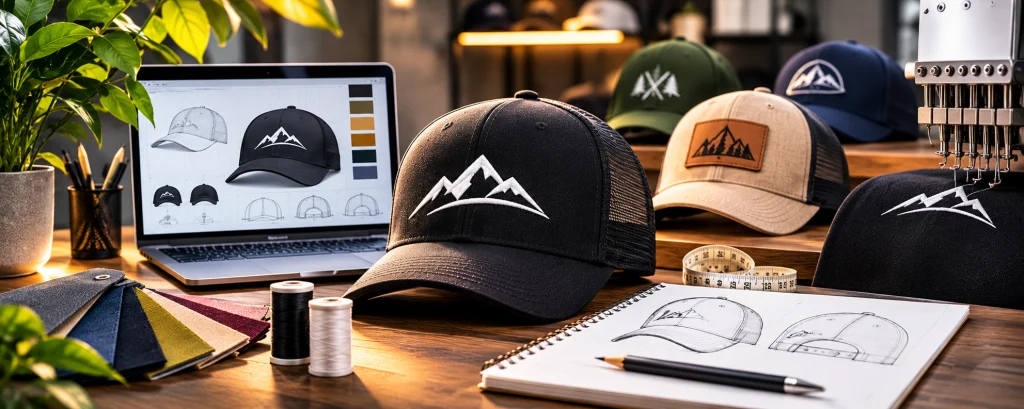
11. Create a Professional Custom Cap Mockup
A mockup allows you to see how your design may look before manufacturing begins.
It is an important stage because it helps identify visual problems that may not be obvious when looking at a flat logo file.
A professional cap mockup should show the design in its intended position and provide a realistic representation of the finished product.
Consider preparing different views:
- Front view showing the main logo
- Side view showing additional embroidery
- Back view showing the closure and branding
- Three-quarter view showing the overall cap shape
- Top or brim view if additional details are included
You can also create multiple colour variations to compare different combinations.
For example, prepare black, white, navy and olive green versions of the same cap.
Reviewing these options can help you identify the strongest design before moving forward.
Why Sample Approval Matters
A digital mockup is useful, but it does not always represent every physical production detail.
Fabric texture, thread appearance, embroidery density and cap construction can influence the final result.
For larger production orders, reviewing a physical sample before approving bulk manufacturing can help reduce unexpected differences.
Make sure the sample reflects the agreed design, material, colour, logo placement and finishing details.
12. Pay Attention to Small Finishing Details
Professional custom caps are not defined by their front logos alone.
Small construction and finishing details can make a significant difference to the final product.
Consider the following elements when developing your design.
Eyelets: These small openings can provide ventilation and may be embroidered or finished depending on the cap construction.
Sweatbands: The inner sweatband contributes to comfort and helps create a finished interior.
Brim stitching: The number, spacing and appearance of brim stitches can influence the overall look.
Inner taping: Custom branding inside the cap can provide an additional opportunity for a premium finish.
Labels: Woven labels and printed tags can help reinforce your brand identity.
Closures: The colour and material of the back fastening should complement the rest of the cap.
These details may seem minor, but they contribute to creating a product that feels thoughtfully designed.
13. Plan Your Budget and Order Quantity
Budget planning is an important part of launching a custom cap collection.
The final cost of your caps can depend on several factors, including fabric selection, cap construction, decoration technique, artwork complexity, order quantity and additional customisation.
For example, a basic embroidered baseball cap may require fewer production steps than a fully customised snapback featuring multiple embroidery locations and special finishing details.
Before requesting a quotation, establish your expected requirements.
Consider the following:
- How many caps do you need?
- Which cap styles are you interested in?
- Do you require custom fabric colours?
- Will your caps feature embroidery or patches?
- How many logo locations are required?
- Do you need individual packaging?
- Are you planning to reorder the same design?
Ordering quantities should match your business objectives.
A small clothing brand might begin with a focused collection to understand customer demand, while an established company may require larger quantities for staff uniforms or retail distribution.
It is also useful to consider future reorders when selecting materials and colours. Maintaining consistent specifications makes it easier to develop a recognisable product range.
14. Common Mistakes to Avoid When Designing Custom Caps
Creating custom headwear can be exciting, but some common mistakes can affect the final appearance and overall quality.
Understanding these issues before production can help you make better decisions.
Using an Overly Complicated Logo
Trying to include every element of your business logo can make the cap look crowded.
Simplify your artwork and prioritise the most recognisable parts.
Choosing Colours Without Considering Contrast
Some colour combinations look attractive on a screen but become difficult to distinguish on fabric.
Always consider how the logo thread will appear against the cap material.
Ignoring Cap Construction
Not every design works equally well on every cap style.
For example, a wide logo may be better suited to a five-panel cap, while certain large embroidered designs may work better on structured fronts.
Selecting the Wrong Decoration Technique
Choosing 3D puff embroidery for artwork containing very fine details can lead to disappointing results.
Similarly, intricate artwork may be better suited to a suitable patch or printing technique.
Select the method according to your design rather than choosing a technique simply because it is popular.
Adding Too Many Branding Elements
A cap does not need a large front logo, multiple side graphics, extensive back lettering and additional decorative details.
Sometimes a simple front logo with one additional detail creates a more professional product.
Skipping the Sample Review
Never assume that a digital mockup will automatically represent the finished physical cap perfectly.
Review the production sample and confirm all important specifications before approving a larger order.
15. How Custom Caps Can Help Grow Your Brand
Custom caps are more than everyday accessories. They can become an important part of your company’s marketing, merchandising and brand-building strategy.
Because people wear caps in different environments, branded headwear provides opportunities for your logo to be seen by audiences beyond your immediate customer base.
Increase Brand Recognition
A well-designed cap featuring your logo can help people become familiar with your business.
When employees, customers or supporters wear your branded headwear, your identity becomes visible in everyday settings.
Build a Professional Team Appearance
Matching caps can help create a consistent appearance for employees and team members.
They are useful for hospitality businesses, retail teams, sports organisations, outdoor companies and event staff.
Expand Your Merchandise Collection
If you operate a clothing or lifestyle brand, custom caps can help expand your existing product range.
You can introduce different colours, styles and seasonal designs while maintaining consistent branding.
Create Memorable Promotional Merchandise
Businesses can use custom caps for trade shows, exhibitions, product launches, community events and promotional campaigns.
Unlike some promotional products, caps have practical everyday value, which can encourage recipients to continue using them.
Strengthen Customer Connections
Branded merchandise can help customers feel connected to a business or community.
For clothing labels, a distinctive cap can become part of a customer’s everyday wardrobe rather than simply another promotional item.
16. A Step-by-Step Checklist for Designing Your Own Custom Caps
If you are ready to develop your own branded headwear, following a clear process can make the project easier to manage.
Here is a practical checklist to help you get started.
Step 1: Define Your Purpose
Decide whether your caps are intended for retail sales, company uniforms, sports teams, promotional campaigns or personal use.
Step 2: Understand Your Audience
Identify the people who will wear your caps and consider their preferred styles, colours and fashion preferences.
Step 3: Choose Your Cap Style
Compare baseball caps, snapbacks, trucker hats, dad hats, five-panel caps, six-panel caps and bucket hats.
Step 4: Select Your Material
Choose a suitable fabric based on comfort, appearance, intended use and budget.
Step 5: Prepare Your Logo
Make sure your artwork is clear, properly sized and suitable for your selected decoration technique.
Step 6: Select Your Decoration Method
Choose between flat embroidery, 3D puff embroidery, patches or suitable printing methods.
Step 7: Finalise Colours
Select the cap fabric colour, embroidery thread colours and any contrasting design details.
Step 8: Decide Logo Placement
Confirm whether your logo will appear on the front, sides, back or other suitable locations.
Step 9: Review Your Mockup
Check the overall appearance, logo proportions, colour combinations and placement.
Step 10: Approve Your Sample
Where sampling is available, review the physical product before approving bulk production.
Step 11: Confirm Your Order
Finalise quantities, specifications, packaging and delivery requirements.
Following these steps can help you turn an initial creative idea into a professionally designed custom cap collection.
17. Why Choose USA Custom Caps for Your Branded Headwear?
Finding the right custom headwear supplier is an important part of developing your brand’s products.
You need a partner who understands that different businesses have different design requirements and that every detail contributes to the finished result.
At USA Custom Caps, our goal is to help customers explore creative possibilities for personalised headwear and develop designs that represent their unique identity.
Whether you are building a new clothing label, developing merchandise for an existing business, creating branded caps for your employees or preparing promotional headwear for an upcoming event, choosing the right customisation options is essential.
From classic baseball caps and modern snapbacks to trucker hats, dad hats, five-panel caps and other popular styles, there are plenty of creative directions to consider.
You can explore different design elements, including:
- Custom logo placement
- Embroidered brand names
- Flat and 3D puff embroidery styles
- Custom fabric and colour combinations
- Different cap silhouettes
- Personalised patches
- Additional branding details
The right design should combine your brand identity with a practical, comfortable and visually appealing product.
If you have an existing logo or a new concept in mind, start by exploring the cap style and decoration options that best match your requirements.
Conclusion
Designing your own custom caps is an exciting opportunity to give your brand a distinctive identity through practical and fashionable headwear.
From choosing the right cap style and fabric to developing your logo, selecting embroidery techniques and planning additional design details, every decision contributes to the final product.
The most successful custom cap designs are not necessarily the most complicated. They are the ones that combine attractive styling, comfortable materials, suitable construction and recognisable branding.
Whether you prefer classic embroidered baseball caps, bold 3D puff snapbacks, relaxed dad hats or breathable trucker caps, the important thing is to create a product that genuinely represents your brand and appeals to the people who will wear it.
Take time to understand your audience, experiment with different colour combinations, prepare suitable artwork and review your design before production.
With the right planning and creative direction, your custom caps can become more than branded accessories. They can become recognisable products that customers enjoy wearing and that help your business build a stronger visual identity.
Ready to bring your cap design to life? Explore USA Custom Caps and start creating custom headwear that reflects your brand’s personality.